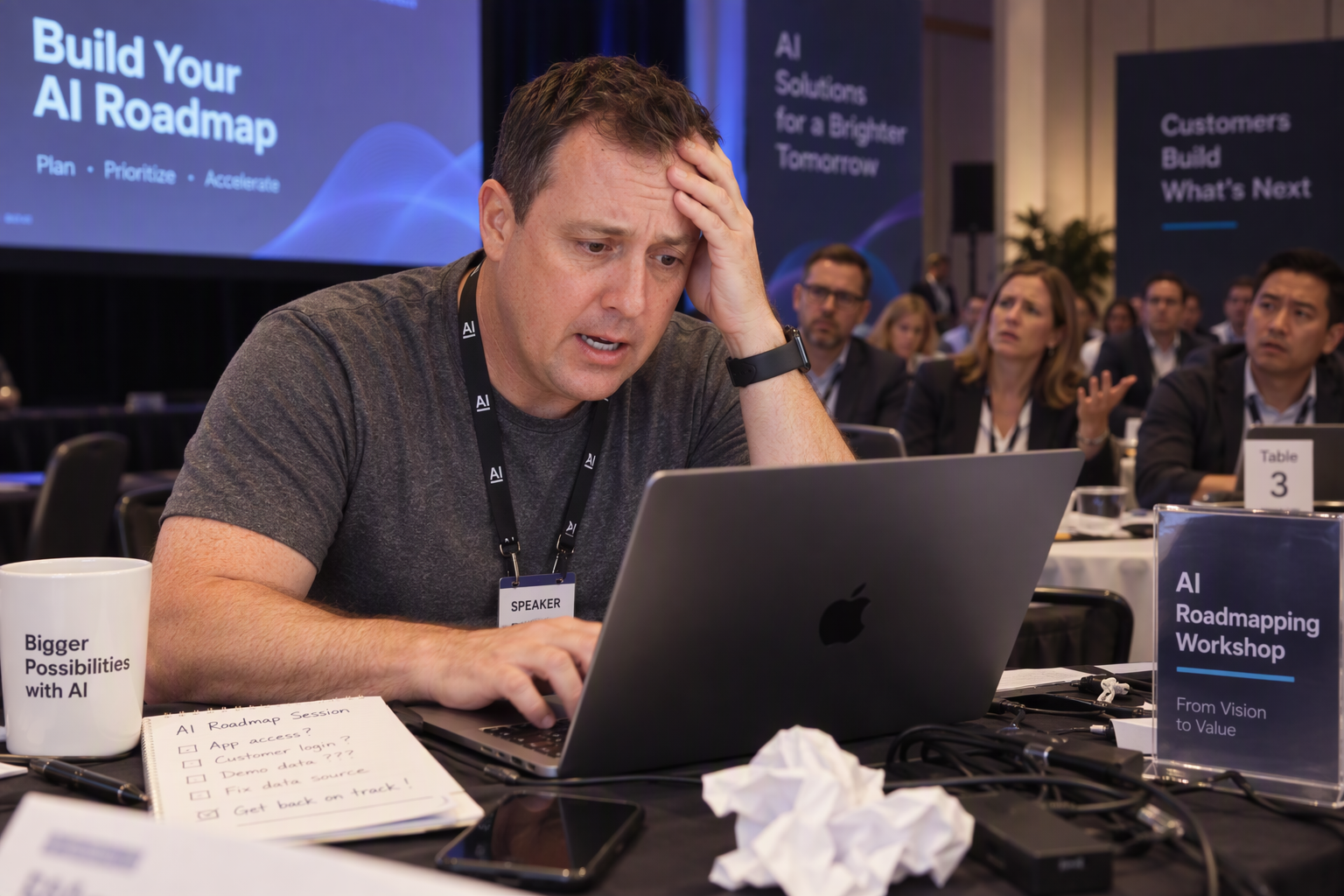
Dr. Ryan Ries popping back in. Have you been keeping up with the 2026 Winter Olympic Games?
I was watching the winter games over the weekend. It was incredible seeing the skeleton event where the guy won by 0.001 of a second. Crazy!
I always laugh at the finish of some of these events, when one person beats another by something crazy like 0.008 seconds and the commentators say something like, “it wasn’t even close!”
This got me thinking about precision, measurement, and where AI fits in at the Olympics. With all the developments in AI over the past couple of years, I was sure there are some cool new innovative ways AI is being used in the Olympics.
So, I did what any curious person would do…
My Brief Rabbit Hole into AI at Milano Cortina
Turns out, AI is everywhere at these Games and was a part of the Olympics prior to this year. Here's what I found:
- First-person view drones transmitting live images for dynamic race track perspectives
- 360-degree real-time replay systems using multi-camera setups and stroboscopic analysis
- Curling stone tracking showing path, speed, and rotation in real time
- Olympic GPT providing real-time results and answering questions about ongoing competitions
- AI-generated article summaries on Olympics.com for quick overviews
- Virtual cloud-based outside broadcasting vans reducing energy consumption by 50 percent
- Automated video description platforms breaking broadcasts into searchable clips
- Real-time traffic analysis on Olympics.com to identify the most valuable moments for fans
- AI-assisted judging in figure skating to identify rotation counts during jumps
- Automated measurement systems for jump height and take-off angles in big air, halfpipe, and ski jumping
Some of this is really cool.
The drone perspectives that make you feel like you're racing alongside skiers is truly an experience upgrade. The curling stone tracking that shows path, speed, and rotation in real time actually helps people understand a sport most of us have never played.
Olympic GPT is making its debut too, specializing in producing content for Olympics.com. Real-time results, sport regulations, and for the first time, it can interact with questions about ongoing competitions.
The production infrastructure is getting smarter. Virtual outside broadcasting vans running on cloud infrastructure are cutting energy consumption by about 50 percent while enabling remote production. The cloud-based master control room they tested at the Dakar Rally in January achieved 75 percent space savings and 65 percent energy reduction.
Judging: The International Olympic Committee is considering using AI to support judging in figure skating, helping judges precisely identify the number of rotations completed during a jump. The technology will extend to big air, halfpipe, and ski jumping events too, where automated systems could measure jump height and take-off angles.
On the surface, this sounds reasonable. In sports like gymnastics and figure skating that rely on panels of human judges, AI gets pitched as the solution to bias, inconsistency, and lack of transparency. Judges have to assess complex movements performed in fractions of a second, often from limited viewing angles, for hours on end. Errors happen. But I could definitely see how this could cause issues (lack of understanding artistic expression, biases, etc).
Video Clips: AI is also managing the flood of video coming in during events, breaking broadcasts into searchable clips, suggesting descriptions and keywords, helping teams find highlights faster. Then it analyzes real-time traffic spikes to identify what fans actually care about. I wonder if AI knew we would all enjoy the clip of the Norwegian biathlete confessing to cheating on his girlfriend on international television.
 The one thing I wasn’t excited at all about was the AI fashion agent for the Olympics. Now, let’s just say I’m not known for my fashion sense… (outside of my Mission Mordor bootleg merch) so it could just be that I don’t get this. You’ll have to let me know what you think about this – cool or no?
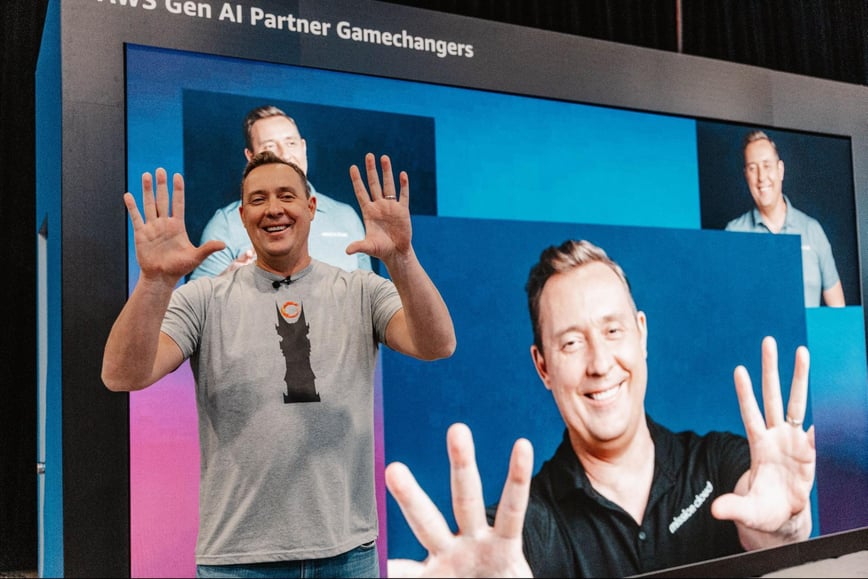
Here’s a throwback to re:Invent 2024 in my bootleg Mission merch!
In Other News
Before I wrap up, a few quick hits on AI news caught my eye this week and I figured I’d share.
Amazon’s Content Marketplace for AI
Amazon is planning to launch a marketplace where publishers can sell their content to firms offering AI products. According to The Information, AWS has been circulating slides that group this marketplace with its core AI tools like Bedrock and Quick Suite. This comes as publishers and AI companies negotiate rules for using online content, with publishers pushing for usage-based fees that scale with how much their content gets used. Microsoft announced something similar last week with its Publisher Content Marketplace. All this to say, the fight over who owns what in the AI training data world is getting more structured, but it's far from settled.
OpenAI Hires OpenClaw Creator
OpenAI has hired Peter Steinberger, the developer behind OpenClaw (remember our deep dive a couple weeks ago?). The project went viral and became one of the fastest-growing repositories on GitHub, passing 175,000 stars in just a few months. Some users are already treating OpenClaw as a co-worker to automate daily work. OpenClaw will remain open source under an independent foundation, with OpenAI sponsoring its development. What interests me here: we're moving from AI as a tool to AI as a teammate, and the talent war for agent developers is heating up.
AWS CEO Says SaaS Apocalypse Fears Are Overblown
AWS CEO Matt Garman told CNBC that investor fears about AI models disrupting major software companies are exaggerated. Technology stocks have sold off this year, with the iShares Expanded Tech-Software Sector ETF down 24% so far in 2026. Analysts are calling it the "SaaS apocalypse." Garman said, "The large players of today have an inside track to winning that business. Now, they have to innovate, just like the rest of the world."
I liked his take. The established players have distribution and customer relationships. But standing still means getting disrupted, so we’ll see if they can move fast enough.
My Final Thoughts
Whether it's the Olympics using AI to judge figure skating routines or AWS customers automating their logistics operations, one thing is clear: AI is everywhere and it isn’t just aspirational. AI is operational.
At Mission, we help customers get the most ROI with AI on AWS. After hundreds of engagements, we've seen what works and what doesn't when it comes to AI initiatives. If you're thinking about where AI fits in your business or how to move from pilot to production, let's talk. Set some time with us and we can walk through what makes sense for your organization.
Let me know if you want to chat more about this (click this link to schedule with our team). I always enjoy hearing customer experiences and talking through challenges with AI.
Until next time,
Ryan
Now, time for this week's AI-generated image and the prompt I used to create it.
Create an image of a puppet creature with big eyes, green fur, and a big mouth that is figure skating for Team USA. You can see fans visibly excited in the background, throwing roses onto the ice to congratulate the puppet for such a great performance. 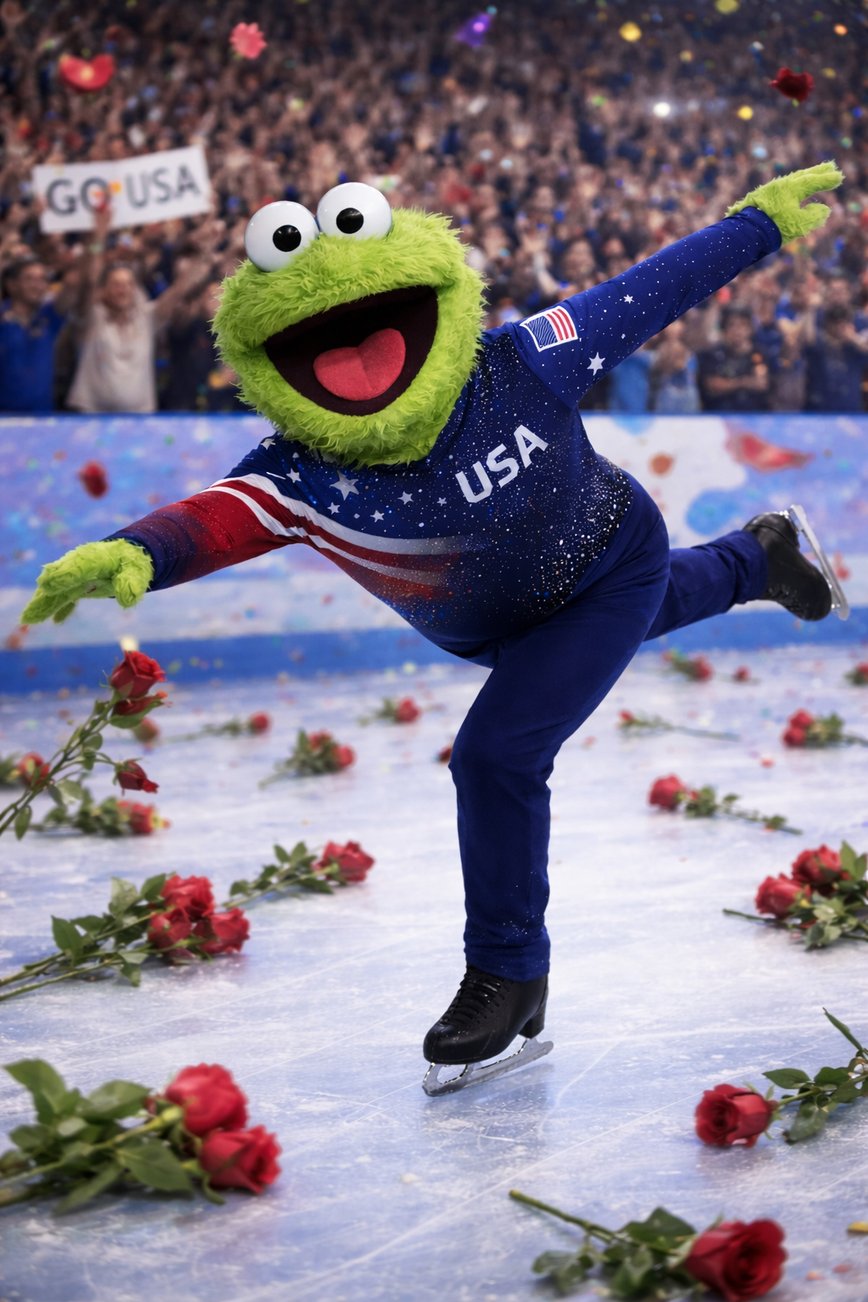

.png)