
Dr. Ryan Ries here. What a week.
Let me walk you through the stories that I found most interesting while simultaneously scratching my head.
Summing up HumanX Findings
Last week was HumanX, a conference in San Francisco rapidly gaining a name as one of the most important gatherings in AI. I want to talk about what dominated the conversation, because the themes are relevant to anyone building with AI right now.
First, it’s a true Claude craze out there.
Anthropic and Claude Code were the undeniable favorites this year.
But, as we know, this industry moves FAST. We've all watched the "who's winning" narrative flip dozens of times already. If you're making long term architectural decisions based on which model provider is the best that week, you're building on sand.
Second theme: the AI adoption bottleneck is organizational transformation.
Speaker after speaker echoed the same thing. Implementing AI is the (somewhat) straightforward part. Rewiring a company or department around it is where teams stall.
I always tell customers that to make AI successful organizationally, you need stop trying to bolt AI onto your existing processes and instead rethink those workflows from scratch with AI at the center. That sounds obvious when you read it. In practice, it requires leadership to admit their current processes might need to be dismantled, and requires actual change management, which is a much harder conversation.
The third and final conference takeaway was geopolitical.
China is squeezing US labs on two fronts simultaneously.
- They're undercutting American companies on price with competitive open weight models.
- They're actively recruiting top Chinese researchers currently working in the US back home.
I don’t have a takeaway for you here, but just something to pay attention to.
What’s Claude Mythos?
Anthropic unveiled Claude Mythos, an unreleased frontier model the company says surpasses nearly all human experts at finding and exploiting software vulnerabilities.
The proof is in the pudding... It uncovered a 27-year-old flaw in OpenBSD. A 16-year-old vulnerability in FFmpeg. It autonomously chained Linux kernel exploits without any human guidance.
Instead of releasing Mythos as a product, Anthropic launched Project Glasswing, giving a limited group of partners access to the system. That group includes AWS, Apple, Google, Microsoft, NVIDIA, Cisco, CrowdStrike, JPMorgan Chase, and the Linux Foundation. Anthropic backed it with $100 million in usage credits and $4 million earmarked specifically for open source security work.
For those of us building on AWS, Amazon Bedrock now offers Claude Mythos Preview as a gated research preview through Project Glasswing...
I think this is really interesting because Anthropic isn’t launching this as a product for everyone. It's a controlled cyber infrastructure which is a big shift in how the industry has been thinking about these powerful models. The question it raises for every organization: when the tools get this capable, who should have access, and under what conditions?
Who actually owns OpenAI?
Now this is actually very interesting...
Most people talk about OpenAI like Microsoft basically owns it. The actual numbers tell a different story.
Microsoft reportedly holds 26.79%.
The OpenAI Foundation sits at 25.80%.
Employees still own a surprisingly large 19.35%.
SoftBank comes in at 11.66%.
Followed by VC and institutional investors at 7.83%.
Amazon at 4.66%.
NVIDIA at 3.47%.
Individual investors at just 0.40%.
Until this information came out in the media, I actually didn't realize how fragmented the ownership really is.
No single entity has anything close to a controlling stake. That probably explains a pattern many of us have noticed from the outside: OpenAI often feels like it's being pulled in several directions at once. When your cap table looks like a peace treaty between competing superpowers, decision making gets complicated. The actual governance structures are far messier than the headlines suggest.
The Artemis Crew
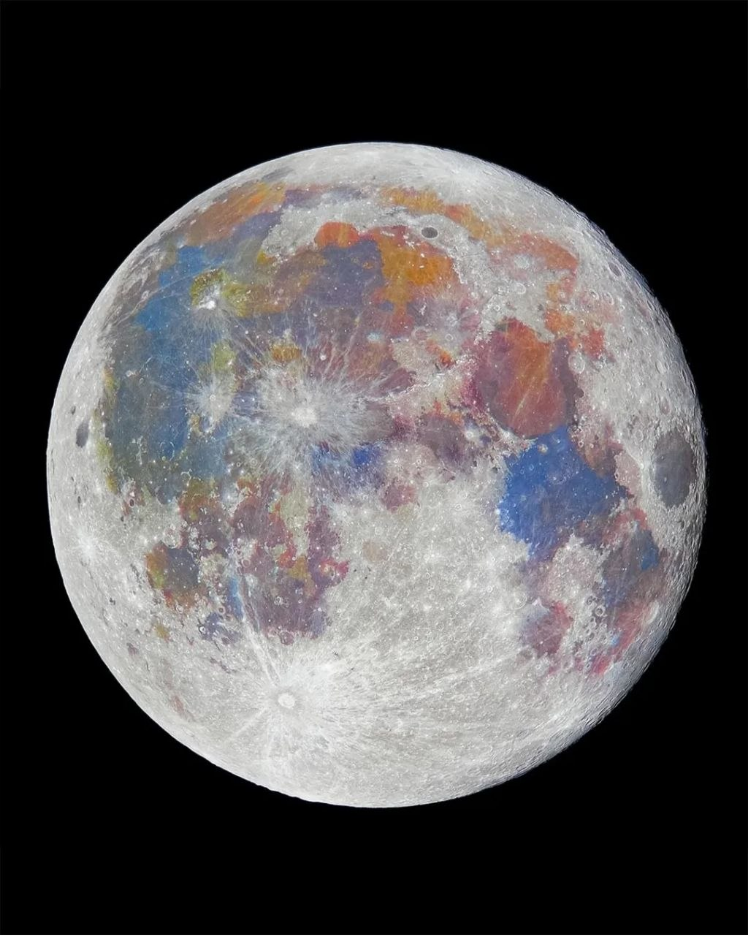
I have to give a shout out to the Artemis crew this week.
If you haven't been following, this is the kind of work that reminds you why the intersection of advanced technology and human ambition still gives you goosebumps. The photos coming from the team have been really cool so I wanted to share the latest one of the moon in case you hadn’t seen it yet:
My Thoughts
This was one of those weeks where the big themes connected in ways that we shouldn't ignore.
- AI adoption is an organizational challenge, not a technical one
- A frontier model so capable it's being treated like controlled infrastructure rather than a consumer product.
- An ownership structure at one of the biggest AI companies that reveals just how many competing interests are shaping the technology's direction.
- And a geopolitical race that's accelerating on multiple fronts.
We're way past the phase where we’re talking about which chatbot gives the best answers.
Now we’re onto the fun, harder questions: governance, access, security, and how organizations restructure to capture the most value from these tools.
Let me know if you want to talk through any of this. I'm always up for a conversation about what you're wanting to achieve at your organization. Or, if you’re interested in building out a use case for your business, reach out to our sales team here.
Until next time,
Ryan
Now time for this week’s AI-generated image and the prompt I used to create it. This was a fun one because I didn’t prompt AI on any specific article headlines.
Create an image of me looking through a ton of articles about AI news and scratching my head. Create fake, crazy headlines for the news articles and make sure they can be seen in the photo. Use my reference photo to create an image of me.

.png)
.png)