
Dr. Ryan Ries here. AWS dropped a lot of news this week and I read through all of it so you don't have to! Plus, a few fun bonus stories at the end.
Before I jump in, we have a ton of new events coming up that you should check out:
- You may already know this, but I am very blunt and don’t hold off on giving my honest opinions. Our marketing team may regret this, but I’m co-hosting an “Agentic AI Unscripted” virtual session with Jonathan LaCour on May 8th.
- We are co-hosting a NJ Builders Day – Gen AI Hackathon with AWS on May 12th.
- We are diving deep into the Boston Celtics’ competitive advantage on AWS with Jay Wessland, Celtics CTO on May 20th.
For a list of all of our upcoming events, head to events.missioncloud.com.
Ok, onto the announcements.
Amazon Quick: More than meets the eye
Amazon Quick just launched a desktop app. On the surface, it looks like another AI assistant. Connect it to your files, your calendar, your Slack, your email. Ask it questions, generate a presentation, build a dashboard. You get the idea.
But zooming out for a second...
Think about the last major shift in how people interact with computers. It was the graphical desktop, folders, files, windows. That interface was so dominant it shaped entire industries and created trillion-dollar companies. The question of "Mac or PC?" defined people's workflows (and personalities) for decades.
That battle is happening again.
Every major AI company and hyperscaler is racing to become your new operating environment, where all your work happens. Microsoft has Copilot woven into Office. Anthropic has Claude Cowork. Google has Gemini baked into Workspace. And now AWS has Quick.
Once you pick one and your files are indexed, your preferences are learned, your workflows are embedded, switching costs become enormous.
Quick has caught my eye because of how aggressively it's trying to cross the walled garden problem. Slack or Teams, Outlook or Gmail, Salesforce or ServiceNow, it claims to work across all of them. Desktop app, not just a browser tab. I could see this becoming a huge value add for enterprise companies who have all different systems.
For example, with CDW acquiring Mission Cloud, we now work across both Slack and Teams, Outlook and Gmail, etc.
AWS is also making it accessible without an AWS account. Sign up with your personal email, Google, Apple, GitHub, or Amazon credentials. Traditionally AWS captured just the enterprise audience, but now they’re able to grab consumers here as well.
The new Amazon Quick desktop app is in preview for macOS and Windows now. Let me know your thoughts if you check it out.
Amazon Connect Expands Into Four Agentic Solutions
Amazon Connect used to be one product, a cloud contact center platform that companies like State Farm and Air Canada have used for customer service. This week AWS expanded it into four distinct agentic AI solutions.
Here's what's in the suite now:
Amazon Connect Decisions handles supply chain optimization. Built on 30 years of Amazon's own operational science, it uses ensemble forecasting models to manage demand planning, triage exceptions, and surface prioritized action items instead of flooding planners with alerts. When a planner makes a judgment call and explains why, the system absorbs that reasoning and applies it going forward. It gets smarter from execution.
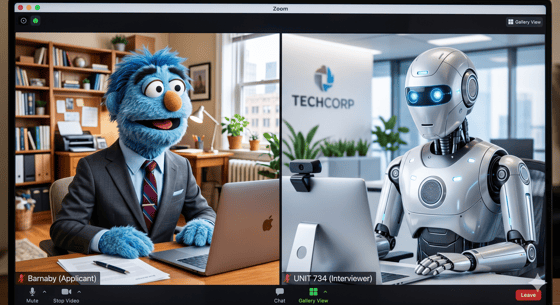
Amazon Connect Talent automates high-volume hiring. AI agents conduct voice interviews around the clock, candidates can interview at 9 p.m. on a Tuesday if that works for them, and recruiters walk in the next morning to competency scores, transcripts, and notes. Candidate names and identifying information are stripped from recruiter dashboards so the evaluation focuses on skills and helps remove biases. This sounds great in theory, but...
You may have seen videos on social media where candidates are interviewing with AI agents and the interviews go horribly wrong. I’m sure there are some great examples of this, but overall I think companies need to tread lightly here.
Amazon Connect Customer is the renamed original Connect product, now with faster configuration. United Airlines reportedly went from concept to live production handling real customer interactions in three months, a process that traditionally takes six months or more.
Amazon Connect Health targets administrative burden in healthcare, automating scheduling and documentation so clinicians can spend more time on actual patient care.
The unifying theme across all four is what AWS calls "humorphism," a design philosophy built around the idea that AI should behave like a teammate rather than a tool. Traditional software was built for tools you operated. Agentic systems can reason, remember, and act. They need a different interface.
I'll note that Amazon Connect Decisions in particular feels less like a contact center product and more like a standalone supply chain platform. Worth watching where that product line goes.
AWS and OpenAI: A smart yet semi-unexpected partnership
This one caught a lot of people off guard, and I get why.
AWS announced an expanded partnership with OpenAI that brings three new capabilities, all in limited preview:
- OpenAI models available directly through Amazon Bedrock
- OpenAI's Codex coding agent running on Bedrock infrastructure
- Amazon Bedrock Managed Agents powered by OpenAI
The practical implication is that AWS customers can now access OpenAI's frontier models through the same Bedrock APIs and enterprise controls they already use. IAM-based access management, AWS PrivateLink, CloudTrail logging, existing compliance frameworks. No new security model to learn, no separate procurement process. Usage counts toward existing AWS cloud commitments. This is great for news for customers.
Codex specifically intrigued me. More than four million people use it weekly to write, refactor, and explain code. Bringing it into Bedrock means enterprise teams can run it inside the environments where they already operate, with AWS credentials, on AWS infrastructure.
Bedrock Managed Agents takes it further. Rather than building all the scaffolding yourself, persistent memory, identity management, permissions, compute, it bundles OpenAI's agentic capabilities with AWS's infrastructure in a managed layer.
For organizations that have been trying to choose between OpenAI's models and AWS's infrastructure, this answers the question. You don't have to choose.
A few bonus, fun stories for your Wednesday
Delivery Robots Are Now Guiding the Visually Impaired
Coco Robotics operates a fleet of sidewalk delivery robots in cities. As they navigate, they now feed real-time hazard data into BlindSquare, the most widely used GPS app for visually impaired people worldwide. The robots detect obstacles and send spoken alerts in 26 languages, approximately 10 meters before a user reaches the hazard.
This is super cool and an amazing use case that evolved into solving greater societal needs.
Plus, it is a useful reminder that infrastructure built for one purpose often has second-order applications that weren't planned. What other data infrastructure are you sitting on that could serve an entirely different problem?
Sony's Robot Beat Elite Table Tennis Players
I have to include this one.
Sony AI's Project Ace just became the first autonomous robot to defeat elite human table tennis players in a formal match, winning 3 of 5 games and outscoring humans 16 to 8 on direct serves.
The fact that a robot can now compete at an elite level in table tennis is WILD! It also says something real about where physical AI systems are headed.
The Ancient Kraken: A Bonus for Your Next Team Meeting
Scientists just confirmed that Nanaimoteuthis haggarti, a finned octopus that lived 86 to 72 million years ago during the Cretaceous period, grew up to 61 feet long. That's bigger than a school bus and larger than any known invertebrate alive today.
The Norse legend of the Kraken is apparently not that far off!
Here’s a pic from National Geographic:

Some Final Thoughts
Every major player is now building toward the same destination: a persistent, context-aware, cross-application AI layer that sits between you and everything else you do at work. The companies that win this race will have the deepest integration into your daily habits and the highest switching costs once you're embedded.
That's a procurement decision, a security decision, and a strategic decision all wrapped together. If you haven't started thinking about which AI operating environment your organization is betting on, now is the time.
Let me know if you have any questions on any of this. I'm always up for a conversation about what you want to achieve at your organization. Or, if you’re interested in building out a use case for your business reach out to our sales team here.
Until next time,
Ryan
Now time for this week’s AI-generated image and the prompt I used to create it.
Generate an image of me hanging out with a massive, 60 foot long finned octopus. We are playing chess underwater. You can see a muppet off in the distance looking scared because of the octopus's size. Use my reference photo to create my image. 

.png)
.png)