
Dr. Ryan Ries here. Sunday night may have not delivered the most entertaining Superbowl game ever, unless you love a great defensive game, but it did deliver SO MANY ads focused on AI.
This week I thought it’d be fun to go through the good, bad, and the ugly of all the AI-focused ads that came out.
THE GOOD
Hat’s off to Google for pulling off an ad that makes AI feel useful in your home without being creepy. A mom and her son use Gemini to visualize their new house with a garden and different wall colors. Simple premise, with clear value, and tugged on the heartstrings.
The ad worked because it showed a specific problem being solved. No vague promises about revolutionizing everything or using big buzzwords that frankly we are all tired of hearing. Just a practical tool helping someone make a decision they actually need to make.
Amazon took the opposite approach with their Alexa+ ad and somehow made it work. Their entire pitch leaned into "scary good" AI. I was cackling through the whole thing. They didn't try to make their technology feel less creepy and instead, they embraced it.
While everyone is focused on trying to make AI feel safe and harmless, Amazon said "yeah, this is kind of unsettling, but look how useful it is." The ad demonstrated capabilities that genuinely feel like a step ahead of current voice assistants.
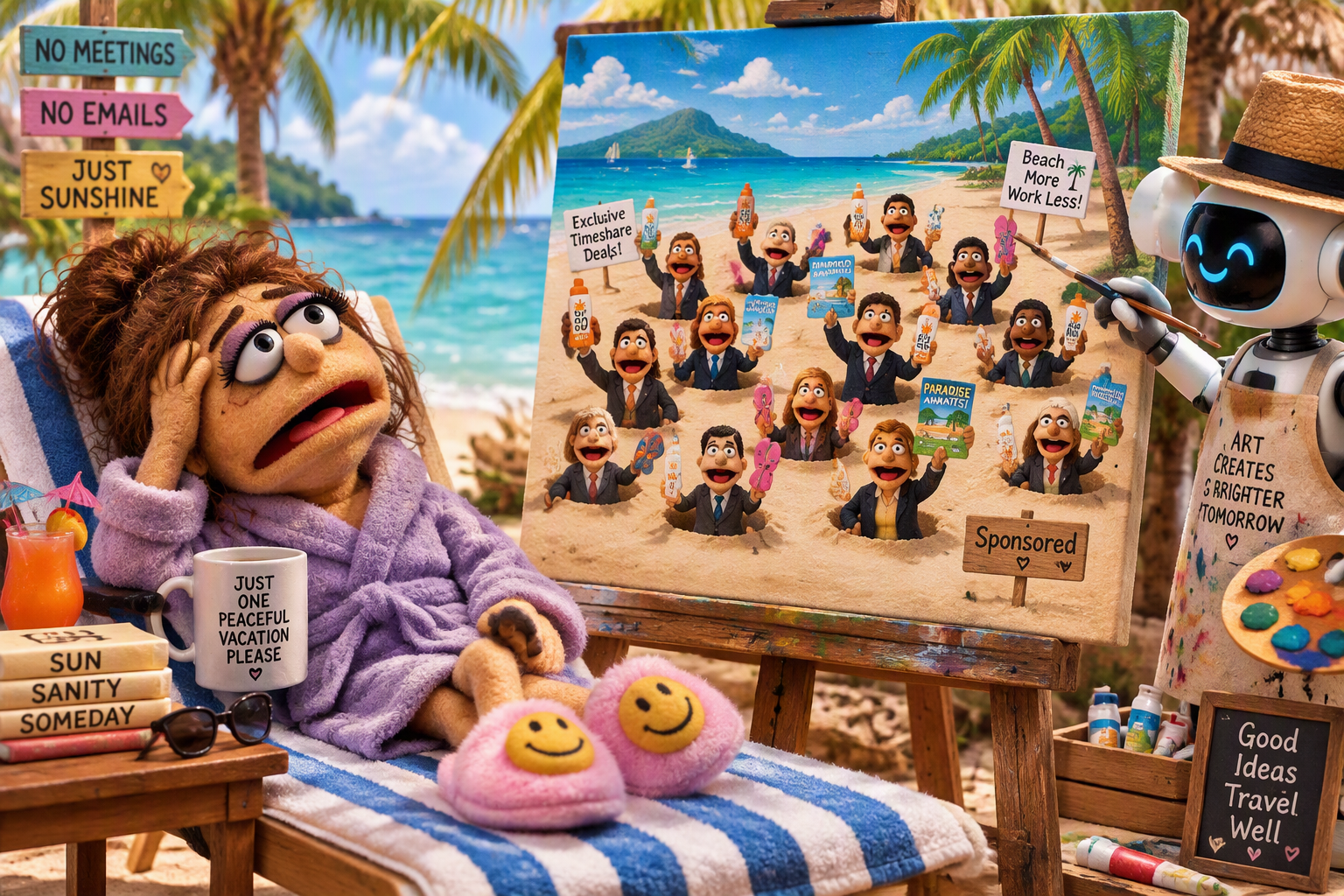
Anthropic took a completely different approach and absolutely crushed it. They released a video series (including a Super Bowl spot) showing AI assistants awkwardly pivoting from helpful advice to sponsored product pitches.
I am not a marketer but this was brilliant. Claude stays ad-free, no sponsored links, no advertiser-influenced responses, and no third-party product placements.
This landed perfectly because it ran just weeks after OpenAI confirmed they're testing ads inside ChatGPT. Those ads start at $200,000 for advertisers and target based on conversation context and chat history. OpenAI insists ads don't influence model responses. Free users can opt out, but doing so caps their daily messages.
THE BAD
Coinbase's ad left viewers with zero understanding of what Coinbase actually does. Reports suggest it earned a collective “Boooo!” heard around the world (kidding).
Ring's "Search Party" feature raised a lot of eyebrows on Sunday night. Upload a photo of your lost pet, and Ring searches neighborhood camera feeds to find it. Sounds helpful until you think about it for five seconds.
Ring claims they built "strong privacy protections from the start" and that camera owners choose "case-by-case" whether to share videos. That framing misses the entire problem.
Once you normalize cross-camera searches for lost pets, you've built infrastructure for surveillance. Technology doesn't care about your intentions. A system designed to find your dog can find anything or anyone. Convenience matters but privacy also matters!
THE UGLY
AI.com / Crypto.com (couldn’t find a good link on Youtube for this ad)
AI.com spent $85 million to demonstrate exactly how not to launch a platform.
Crypto.com CEO Kris Marszalek dropped $70 million on the domain name (paid entirely in crypto). Another $15 million bought Super Bowl advertising. The pitch was for personal AI agents that handle messages, trade stocks, and manage tasks.
Tens of millions watched the ad, were curious and rushed to the site, and then within minutes, the entire system crashed. They should’ve reached out to Mission to make sure their site could handle the load, like we did for Playbill!
Marszalek blamed Google rate limits, claiming they hit "absolute global maximum" capacity. That excuse reveals something worse than a simple crash. Their entire onboarding funneled through a single "continue with Google" button. No backup authentication, no redundancy and no capacity planning. All big no no’s.
What we can learn from these ads
The gap between good and ugly AI ads isn't about budget, what celebrity makes a cameo, or your pyrotechnics. Joking aside:
Google and Anthropic succeeded because they understood their audiences and delivered clear value propositions. One showed practical utility and the other defended principles people actually care about.
AI.com’s ad revealed more about the company infrastructure than I’m sure they had hoped. When your authentication system collapses under predictable load, you're telling potential customers exactly how ready you are for production workloads. That message gets delivered whether you intended it or not.
AI systems live or die on reliability. Trust is hard to build and incredibly easy to destroy.
Mission partners with companies to help build AI infrastructure properly on AWS. We design for scale from day one because we've watched too many expensive failures happen in real time.
If your launch plan involves hoping nothing breaks when millions show up, let's talk before you spend $85 million learning this lesson the hard way.
Until next time,
Ryan
Now, time for this week's AI-generated image and the prompt I used to create it.
Doorbell camera viewpoint, wide-angle slightly distorted fisheye perspective from a front porch. A quiet suburban neighborhood with neat lawns, sidewalks, and parked cars in soft daylight. In the center stands an original, friendly-looking fuzzy creature made of soft textured fabric, like a plush toy come to life. The creature has oversized round eyes, bright orange fur, and small tufts of string-like hair sticking up from its head. It is wearing a purple T-shirt and blue jeans. The creature appears confused or lost, glancing around uncertainly while walking past the house. Slight grain and subtle timestamp overlay typical of a doorbell security camera. Highly detailed, photorealistic lighting, cinematic but natural.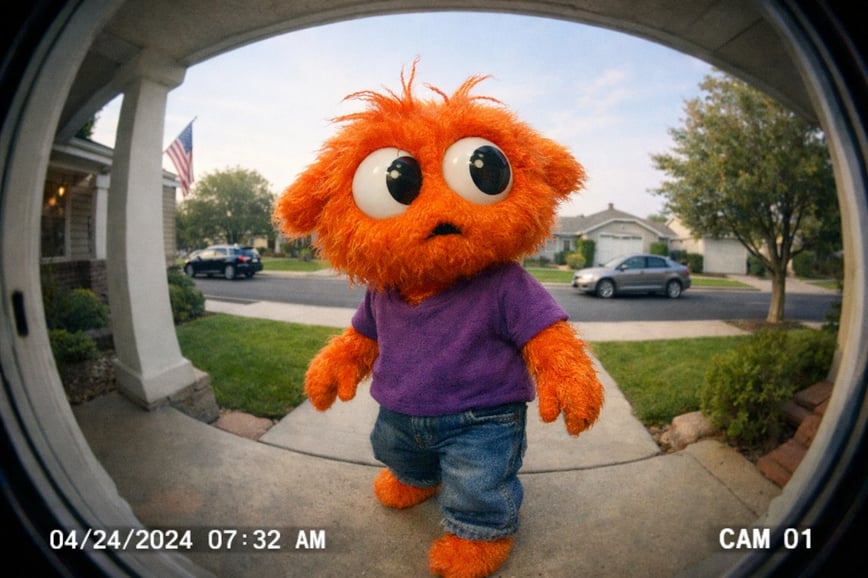

.png)
.png)