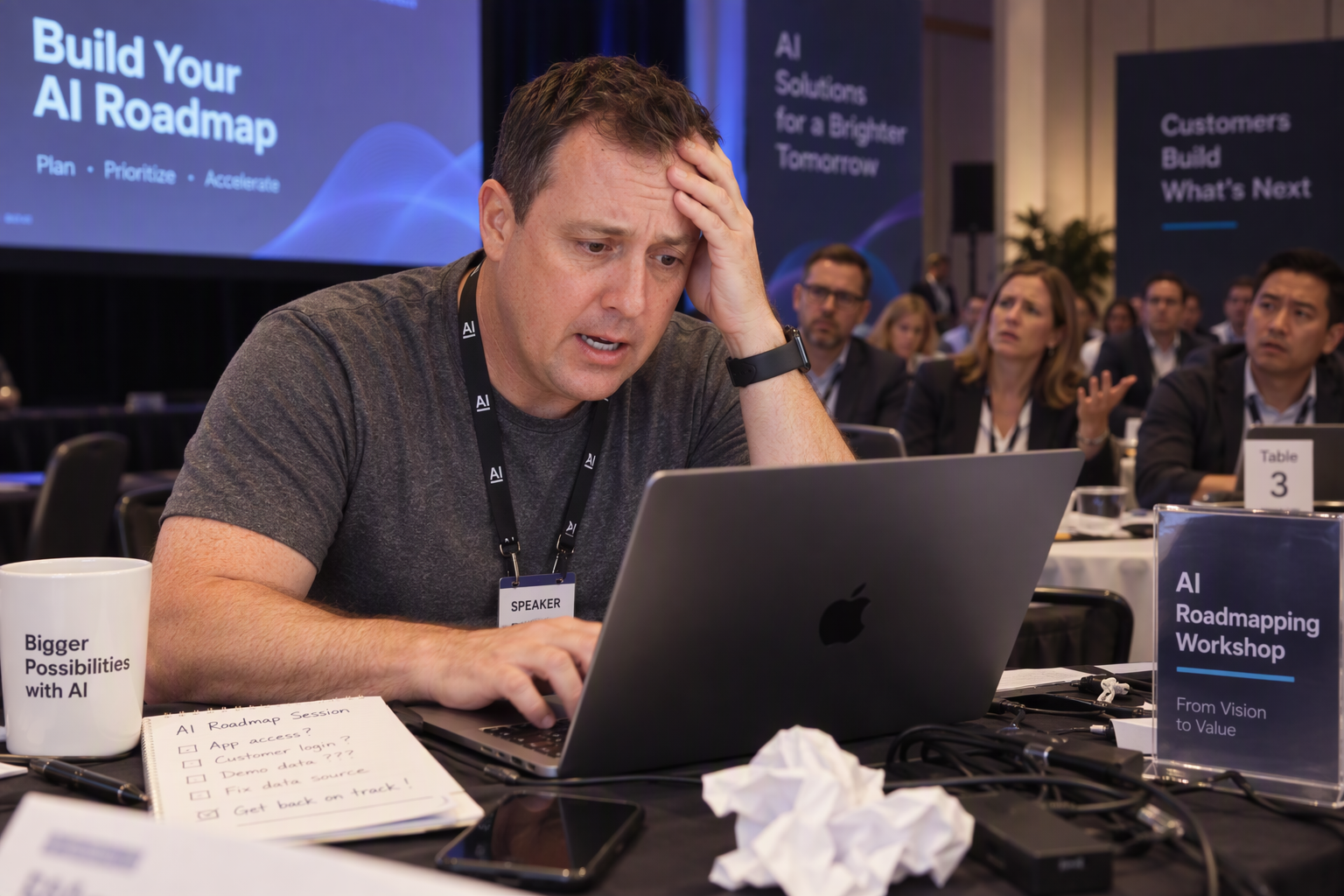
Dr. Ryan Ries here.
I’m sure you can relate to this… I love getting out of the office and traveling to events and conferences, but I don’t love how packed my inbox gets after a couple days of not actively checking it!
Now that I’ve finally climbed my way through, I went looking at everything else that happened across AI this month. Buckle up, there’s a lot!
The Vibe Shift in AI News
A new Pew survey landed that said only 16% of Americans think AI will have a positive impact on society over the next 20 years. 40% expect it to be a net negative. Among people under 30 only 14% feel good about it.
We did this to ourselves. For two years, the loudest voices sold fear. Sam Altman warned entry-level white-collar jobs were on the chopping block. Dario Amodei predicted AI could erase half of all white-collar work. And now, with 115,000+ tech layoffs through May, many pinned on AI, people believe it.
What’s interesting to me is the walkback. Altman now says he was “pretty wrong.” Amodei has pivoted to talking about AI expanding what workers can do rather than replacing them. Maybe true! But you don’t get to spend two years forecasting the apocalypse and then act surprised that people are scared.
If you lead a team, that trust gap is your problem to manage. The people you work with have been marinating in doom headlines. How you roll out AI (with them, not at them) matters more than which model you pick.
OpenAI’s $38.5 Billion Asterisk
Leaked, audited financials (obtained by Ed Zitron, verified by the FT) show OpenAI lost $38.5 billion in 2025, while revenue more than tripled to ~$13 billion. The headline writes itself: company loses 7x more than the year before, right as it files to go public.
But when you read a little deeper: roughly $41.5 billion of that “loss” is a non-cash accounting charge tied to OpenAI’s conversion from nonprofit to for-profit — the books re-pricing equity-like instruments, not money going out the door. Strip that out and the operating loss is about $21 billion, with adjusted cash burn closer to $8 billion. Still enormous. But “burning $8B while tripling revenue” is a very different story than “lost $38.5B”.
Either way, the timing isn’t great. Over the same stretch, ChatGPT’s market share slipped below 50% for the first time (Sensor Tower pegs it at 46.4%) as Gemini and Claude close in. The bull case is the SpaceX playbook: post enormous losses, sell a big enough vision, and the market shrugs. SpaceX just landed the largest IPO on record while bleeding cash. Can Altman tell a story that good? We will find out!
Build vs. Buy: Apple Version
At WWDC, Apple unveiled a new “Siri AI”. It’s a genuinely capable, conversational assistant that can pull context from your apps and act on your behalf. Under the hood, it runs on Google’s Gemini.
Let’s think about this for a moment. The most valuable company on earth, sitting on more cash than most nations, decided to pay its biggest rival to power its flagship product. If that math works for Apple, it works for almost everyone. The “build your own model” dream is quietly dying for most. For the majority of us, the smart move is to own your data and your workflows and rent the intelligence.
The Bill for Training Data
Anthropic agreed to a $1.5 billion settlement in Bartz v. Anthropic, the largest copyright recovery in U.S. history, covering roughly 482,000 works at about $3,113 each. “We trained on it because it was on the internet” is no longer a defense.
This isn’t a one-off either. There are 70+ AI copyright suits active right now, with $50B+ in claimed damages, and an appeals court just heard arguments in another big one.
For anyone building on these models, here’s what you should take away from this story: data provenance is becoming a real cost and a real risk. Knowing where your training and RAG data actually comes from is moving from nice-to-have to table stakes.
Nvidia’s Zero-Water Play
I spend a lot of time on the data center sustainability problem. The UN just projected that data centers could draw ~945 TWh by 2030 (roughly Japan’s entire electricity use), with water consumption around 9.3 trillion liters a year, so I want to flag good news on this topic when I see it.
Nvidia unveiled a new factory design using closed-loop cooling that gets to near-zero water consumption in favorable climates.
As I told Network World a couple of weeks back, power and water performance are now two of the most important issues facing cloud providers. Designs like this are how the industry earns its license to keep building.
What the Heck: Midjourney Is Opening a Spa?
I’ll leave you with the strangest thing I read all month. Midjourney (the AI image company) announced a full-body ultrasound scanner. It lowers you into water, surrounds you with sensors, and scans your whole body in about a minute, with detail the founder says could approach an MRI.
They plan to open “Midjourney Spa” locations in San Francisco, pairing the scanners with saunas, cold plunges, and hot tubs, with ambitions to build 50,000 scanners and run thousands of diagnoses.
From AI art to bathhouse diagnostics is a left turn I did not see coming. But honestly with the boom of wellness culture, it’s probably a smart move.
I suppose you can’t accuse them of thinking small!
My Thoughts
Two things on my mind as I write this.
First: a reckoning isn’t a crash. Every important technology hits the moment when the promises meet the invoices. When trust, economics, law, and physics all demand to be taken seriously at once.
Second, and more personal: nearly every story above is about a cost we tried to skip. We skipped the trust conversation and got a scared public. We skipped clean accounting and got a $38.5B headline. We skipped asking permission and got billion-dollar settlements. We skipped the water math and got community pushback. Same pattern every time: speed now, bill later.
I think this quote I heard from our head of cloud marketing, Luanne Tierney, resonates here, “Go slow, to go fast.”
To win the next phase of AI technology, you need to slow down just enough to do the unglamorous work up front. And in AI, getting your data house in order is the least flashy and most valuable thing you can do.
Let’s Talk
If you’re looking at this list wondering what actually matters for your environment versus what’s just noise, that’s exactly the conversation we have in our Mission Cloud AIM sessions. We help you sort the hype from the fit, map it to your data and your goals, and hand you a plan you can act on. Reach out to our team here.
Until next time,
Ryan
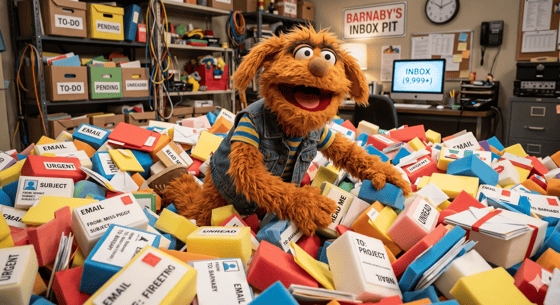
Now, time for this week’s AI-generated image and the prompt I used to create it.

.png)