Dr. Ryan Ries here. Every leader I talk to typically has a baseline understanding of the types of costs that are associated with AI -- subscriptions, token bills, GPUs, etc. But this week two of the biggest names in tech made basically the same argument, independently: The expensive part of AI is what you’re handing over for free.
Are you paying for AI twice?
Microsoft’s Satya Nadella published a piece this week naming a problem he calls the “reverse information paradox.” I’m going to call it “RIP” for the sake of abbreviation (no pun intended).
Basically, what RIP says, is to make a general AI model useful for your business, you have to feed it your proprietary knowledge. Your prompts reveal what you’re working on, your corrections show the AI how your industry or role actually works, and your evaluations show what you consider a good answer. Nadella calls this your “intelligence exhaust,” and every bit of it flows one direction: from you → the model provider.
So you pay once with money, and again with the accumulated know-how that was supposed to be your edge. Over enough interactions, the provider learns how your business runs. That’s RIP. The thing you’re buying quietly extracts the thing that made you valuable.
What’s Palantir up to
A couple of weeks earlier, Palantir dropped a nine-point “AI sovereignty” manifesto making the same case as RIP called "thoughts on the importance of AI sovereignty." The piece basically says statements like:
“Own your own data.”
“Own your own weights, the numbers baked into a model after training.”
“Do that, or someone else ends up owning your future.”
Then it talks about tokenmaxxing and says nobody selling tokens wants to charge based on the value they actually deliver.
To clarify, tokenmaxxing and RIP aren't the same complaint. One says you're billed for volume, not value. The other says your knowledge leaks out with every prompt. But strip away the mechanism and both land on the same suspicion. The way this relationship is structured, you're not sure who's actually getting the better end of it, you or the company selling you the tool.
Now, keep in mind that Palantir’s whole business model runs on deploying AI inside a customer’s own walls, so this is partly a sales pitch. But still, when Palantir and Microsoft, two companies that agree on almost nothing, land on the same conclusion just a couple weeks apart, I’d say that’s something worth noting!
Even Microsoft wants out
Per Bloomberg, tens of thousands of AI prompts in Excel and Outlook each week are now handled by Microsoft’s in-house MAI models instead of OpenAI’s and Anthropic’s. AI chief Mustafa Suleyman said bluntly, “We pay a lot of money to Anthropic — so our goal is to reduce and ultimately eliminate that cost.”
I found this interesting because Microsoft has a ~27% stake in OpenAI and a deep Anthropic relationship, yet they still want off the frontier-model treadmill badly enough to build their own.
You’ve got options
China’s Meituan open-sourced LongCat-2.0, a 1.6-trillion-parameter model under a permissive MIT license, with a million-token context window, trained on roughly 50,000 Chinese-made chips and not a single Nvidia GPU. On some coding benchmarks it beats GPT-5.5 and Gemini (though not the top Claude models). You can download it, run it inside your own walls, fine-tune it on your data, and never send a prompt outside the building.
The point I’m trying to make here isn’t “go use Chinese models.”
It’s that frontier-class capability is escaping the walled gardens. Owning your own AI stack used to be a fantasy reserved for the biggest orgs, but not so much anymore.
My Thoughts
The mistake is hearing “AI sovereignty” and thinking it means “use less AI” or “distrust every vendor.” It doesn’t. It means ownership.
Models are becoming interchangeable engines — swappable, commoditizing, cheaper by the month.
What isn’t interchangeable is your data, your workflows, and the institutional judgment you’ve built over years. Nadella’s phrase for the goal is a “learning loop,” where your human capital and your AI usage compound for you instead of for a vendor. In practice that means keeping your data and weights where you control them, treating models as replaceable parts, and making sure the knowledge your team generates every day accrues to your balance sheet and not silently to someone else’s next training run.
One More Thing
On the theme of keeping things to yourself: a developer named Eric Lu built Ghost Font, a typeface designed to be readable by humans but not by AI models and it pulled 17M views. Half genius, half security blanket for the robot-uprising crowd. I’ll admit I bookmarked it!
Let’s Talk
If ownership sounds right but you’re not sure how to get there, like which workloads to keep private, when an open model beats an API, how to keep your data in-house without slowing your team down, that’s exactly what we work through in our Mission Cloud AIM sessions. We help you sort the hype from the fit and hand you a plan you can act on. Reach out to our team here.
Until next time,
Ryan
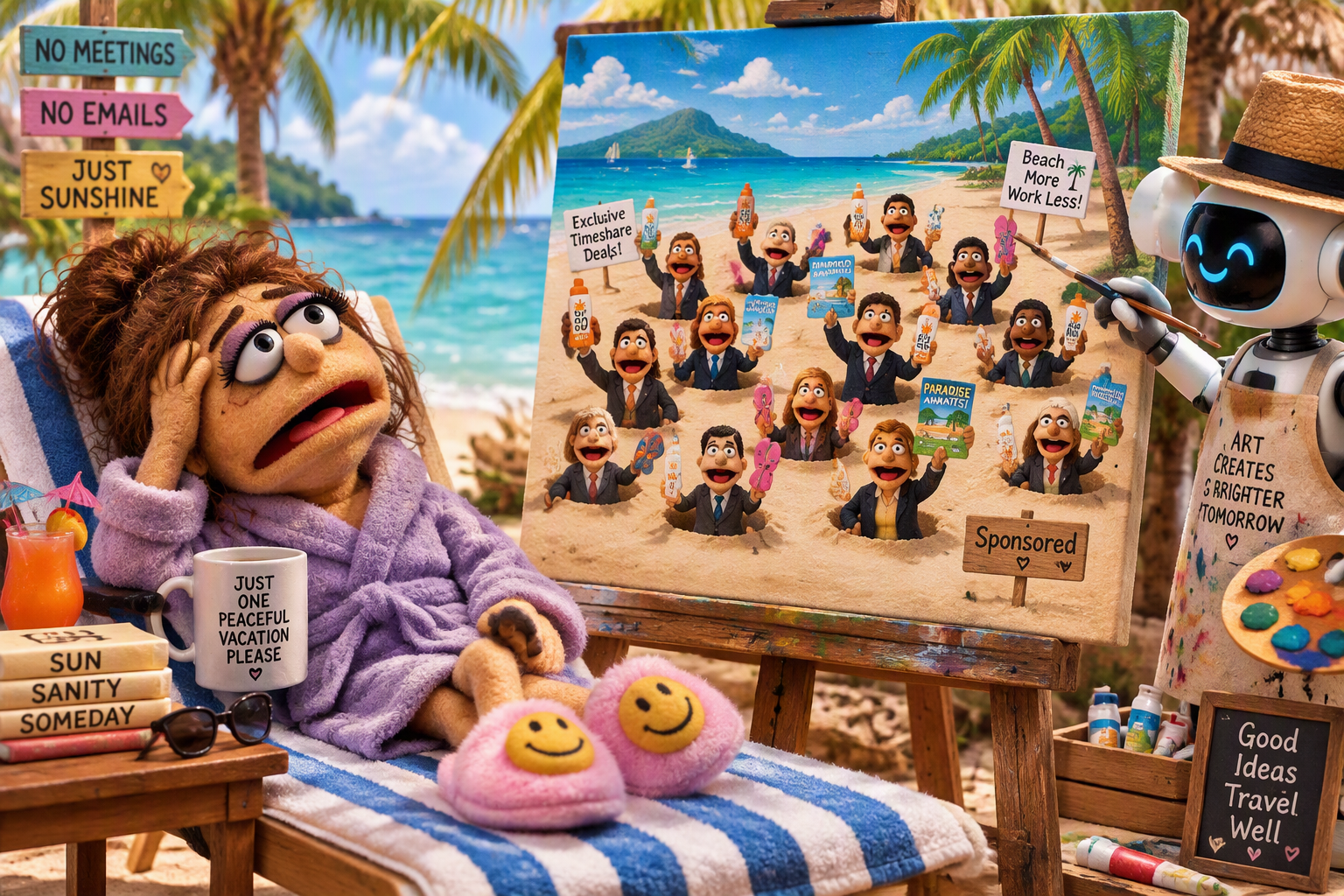
Now, time for this week’s AI-generated image and the prompt I used to create it.
Next week I’ll be at AMD’s Advancing AI Conference. Let me know if you’ll be there!
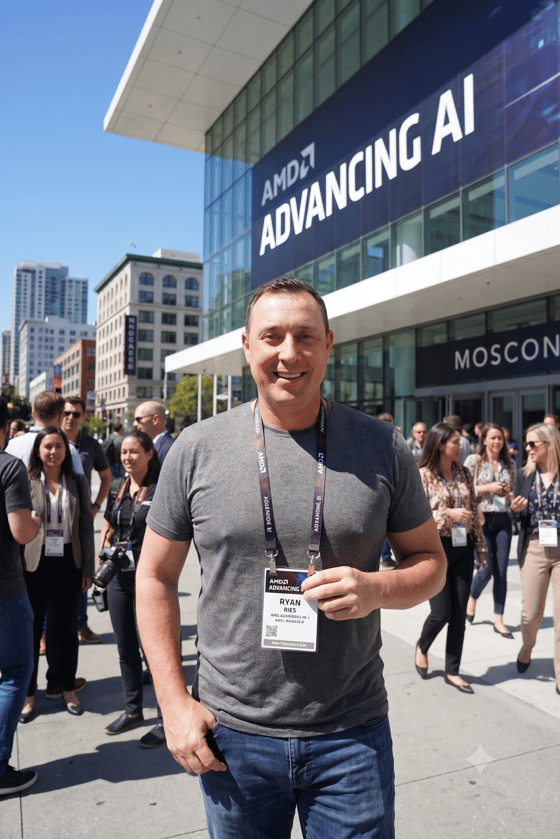
Generate an image of me attending AMD's Advancing AI next week in san francisco. Use my image as a reference for what i look like. You should see the moscone center in the image.

.png)